Sardinien entdecken
— from coves to nuraghi and hiking trails.
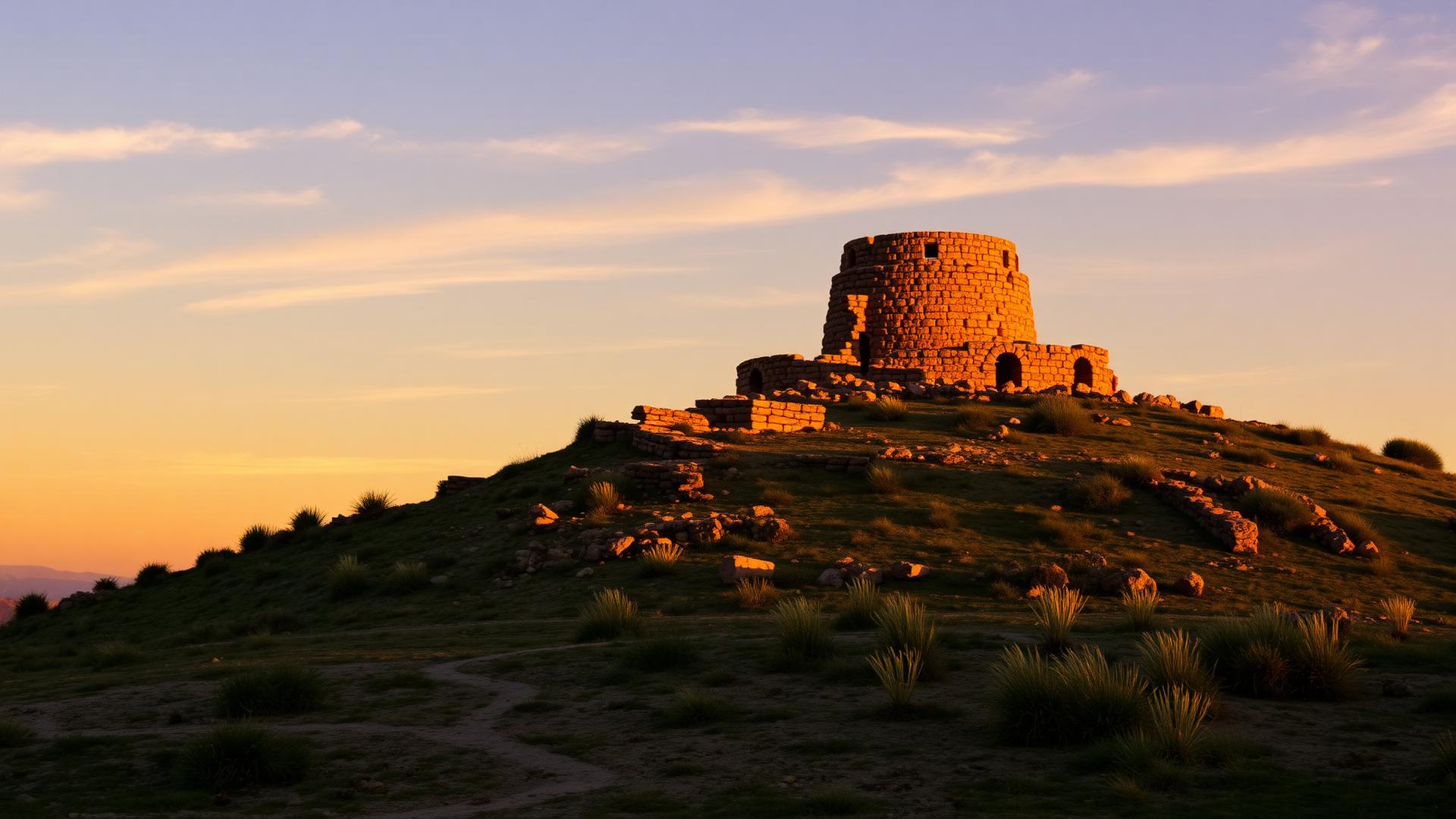
Nuraghe Accu Sa Pira is a fascinating prehistoric site in Sardinia, offering insights into the Nuragic culture of the Bronze Age.
The Allée couverte Brancatzu is a megalithic gallery grave in Sardinia, offering insights into pre-Nuragic burial rites and potentially part of a larger necropolis.
The rock altar of Santo Stefano in Oschiri is a unique prehistoric site in Sardinia with geometric niches carved into granite and nearby Domus de Janas, a true archaeological enigma.
The Roman Amphitheater in Cagliari is one of Sardinia's most significant Roman structures, partly carved into the rock.
Oristano
The Antiquarium Arborense in Oristano is a significant archaeological museum showcasing Sardinia's rich history, particularly the Arborea region.
The Archaeological Park of Pranu Muttedu near Goni hosts Sardinia's largest menhir collection and pre-Nuragic burial sites, often called "Sardinia's Stonehenge".
The Arco di S'Archittu is an impressive natural rock arch on Sardinia's west coast, shaped by wind and sea, a landmark of the region.
The archaeological area of Iloi in Sedilo is a significant prehistoric complex featuring a nuraghe, village, Giants' Tombs, and a rock-cut hypogeum necropolis.
The Ispiluncas necropolis features an impressive collection of Domus de Janas, rock-cut tombs of Sardinia's prehistoric cultures near Sedilo.
Matzanni is a significant archaeological site near Vallermosa featuring impressive Nuragic and Punic sacred buildings, including three holy wells and an ancient village complex.
The Mesumundu Archaeological Park in Siligo combines Roman baths, an early Christian necropolis, and traces of settlement from prehistory to the Middle Ages.
The Nuragic complex S'Arcu 'e Is Forros in Villagrande Strisaili is an important archaeological sanctuary from the Nuragic period with megaron cult buildings.
Tharros is a significant Phoenician-Roman port city in Sardinia, nestled in a breathtaking coastal landscape. A must-see for history enthusiasts.
Porto Torres
Discover Sardinia's Roman past at the archaeological site of Turris Libisonis in Porto Torres, an impressive Roman colony.
Hidden beneath the Church of Sant'Eulalia in Cagliari, this fascinating archaeological site features Roman ruins and a treasure museum.
Santa Teresa Gallura
The Grotta Azzurra near Masua on Sardinia's southwest coast is a natural wonder, enchanting visitors with its unique blue light display when sunlight enters underwater. It's a highlight of many boat excursions.
Bagoi in Perdaxius is a testament to Nuragic culture in Sulcis Iglesiente, nestled in an agricultural hilly landscape.
The Bear Rock (Roccia dell'Orso) near Palau is a natural granite sculpture majestically overlooking the coast and the La Maddalena Archipelago.
The Batteria Antinave Antonio Sogliuzzo in Capo Sperone was a significant coastal defense structure in southern Sardinia, once equipped with four cannons.
The archaeological site of Bau Romanu in Sardinia holds remains from the Roman era and possible connections to Nuragic cultures.
Burcei
Gairo
San Vito